Peanut: Mini Tracked Robot
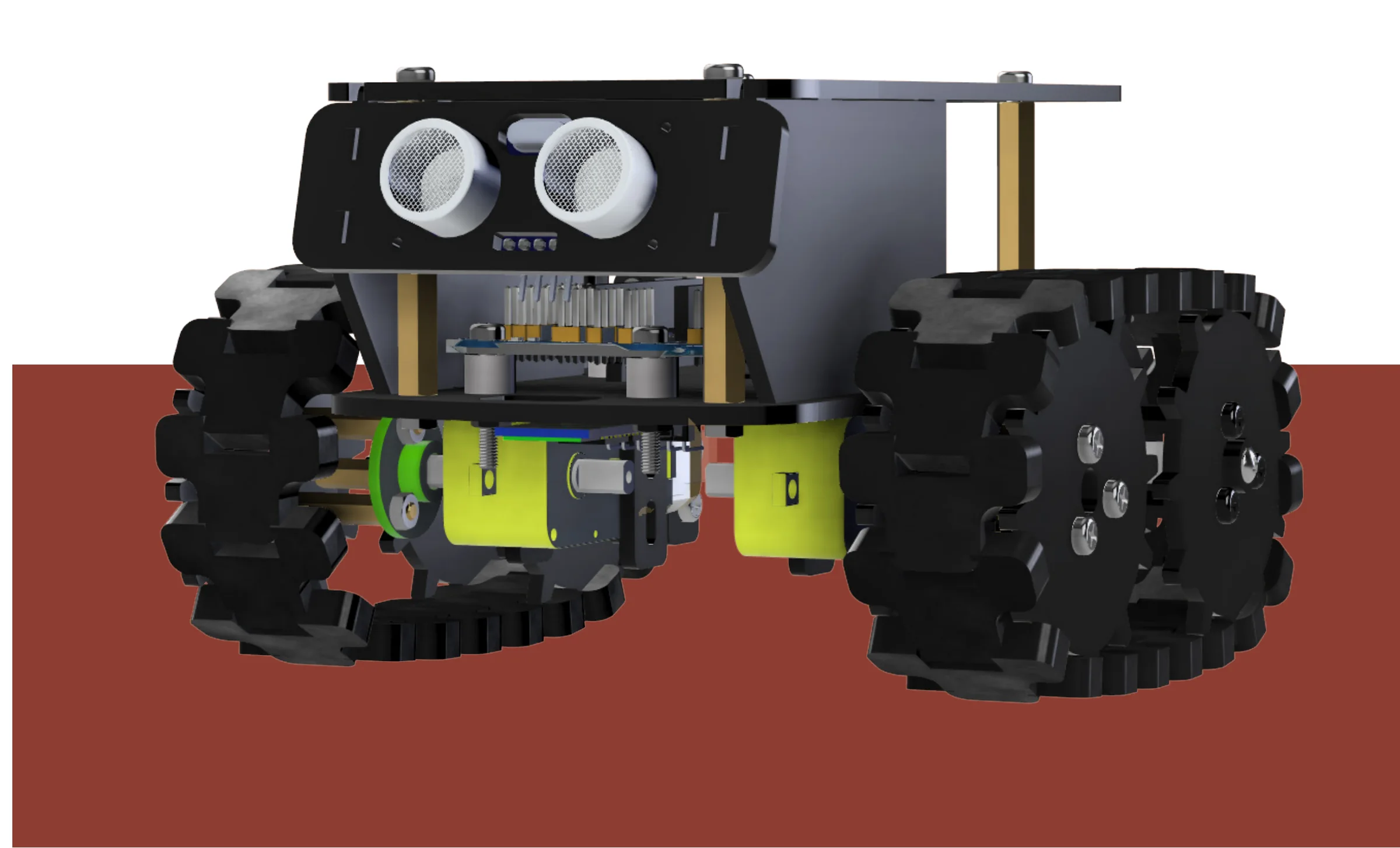
An Arduino-based mini tracked robot redesigned as both a physical product and an assembly experience, developed for commercial production at Robotistan. Internal project name: REX.
Designing the kit, not just the robot
With Arduino-based educational robotics kits, the real difficulty is usually not the electronics, it's whether the user can assemble the parts in the right order and orientation. The kit is a product that has to be designed as both hardware and an assembly experience.
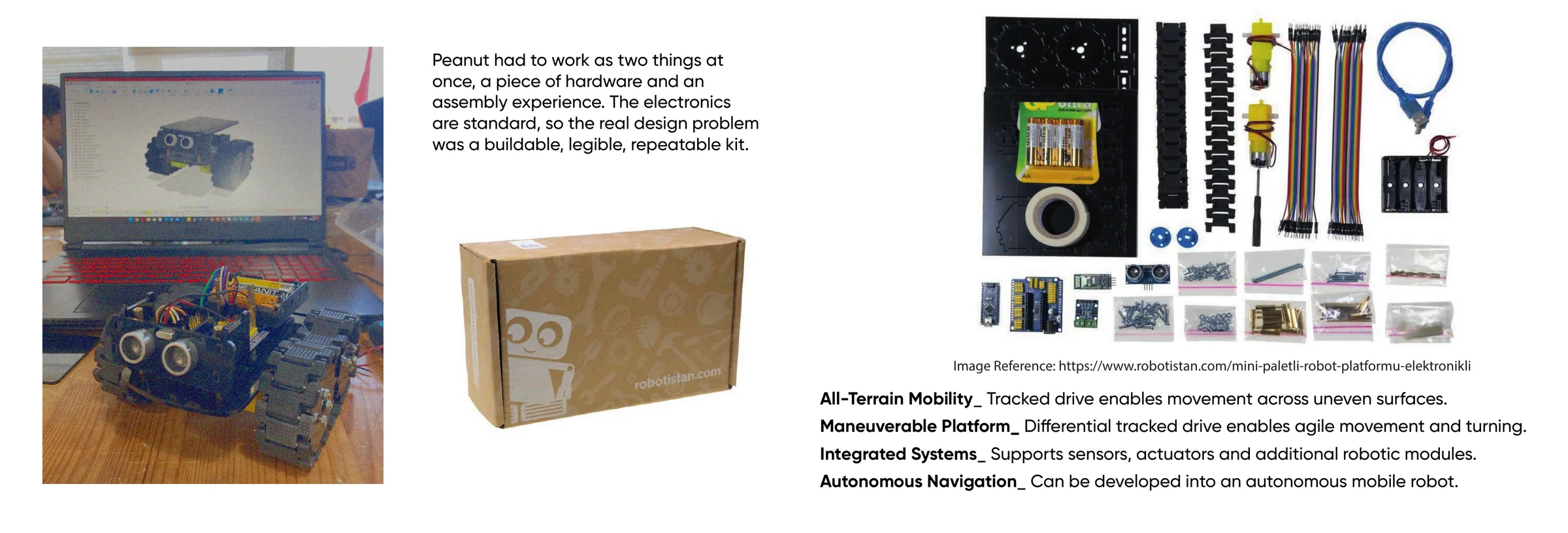
Peanut had to work as two things at once, a piece of hardware and an assembly experience. The electronics are standard, so the real design problem was a buildable, legible, repeatable kit.
- All-terrain mobility: tracked drive enables movement across uneven surfaces.
- Maneuverable platform: differential tracked drive enables agile movement and turning.
- Integrated systems: supports sensors, actuators and additional robotic modules.
- Autonomous navigation: can be developed into an autonomous mobile robot.
Deciding what “right” meant
Four requirements framed every decision.
| Criterion | Requirement |
|---|---|
| Assembly ease | User must be able to assemble it without electronics experience |
| Electronics integration | Arduino Nano, HC-05 Bluetooth and HC-SR04 sensors must seat cleanly into the body |
| Manufacturability | Body must be made from laser-cut acrylic parts |
| Cost | Must stay within educational-kit price range |
A layered body on brass standoffs
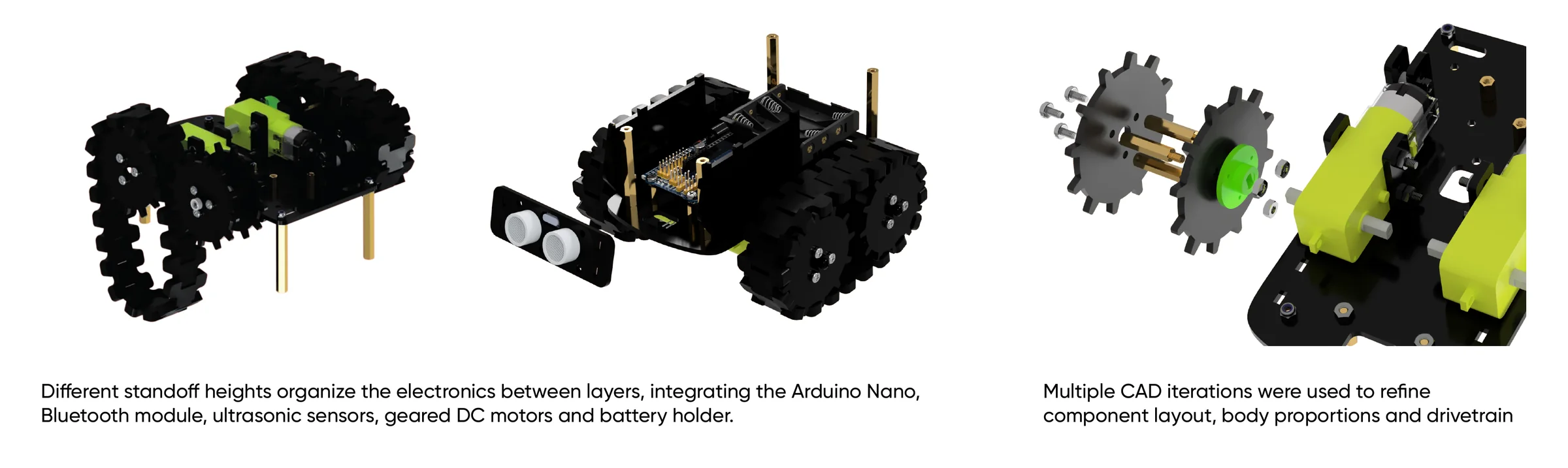
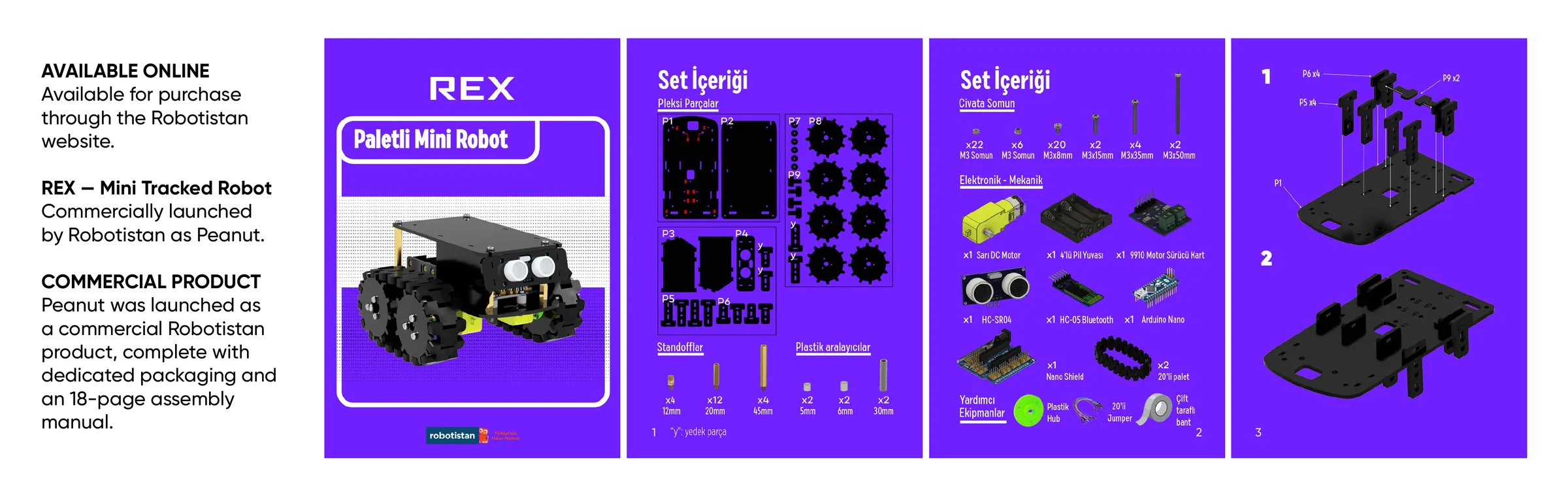
The body is built from stacked laser-cut acrylic plates joined by brass standoffs, simplifying production, component organization and assembly. Different standoff heights organize the electronics between layers, integrating the Arduino Nano, Bluetooth module, ultrasonic sensors, geared DC motors and battery holder.
The Arduino Nano shield, HC-05 Bluetooth module, two HC-SR04 ultrasonic sensors, geared DC motors and battery holder were defined to sit between layers in a specific order, set by standoff heights (such as 12mm, 45mm).
From v2 to the v4.2 final
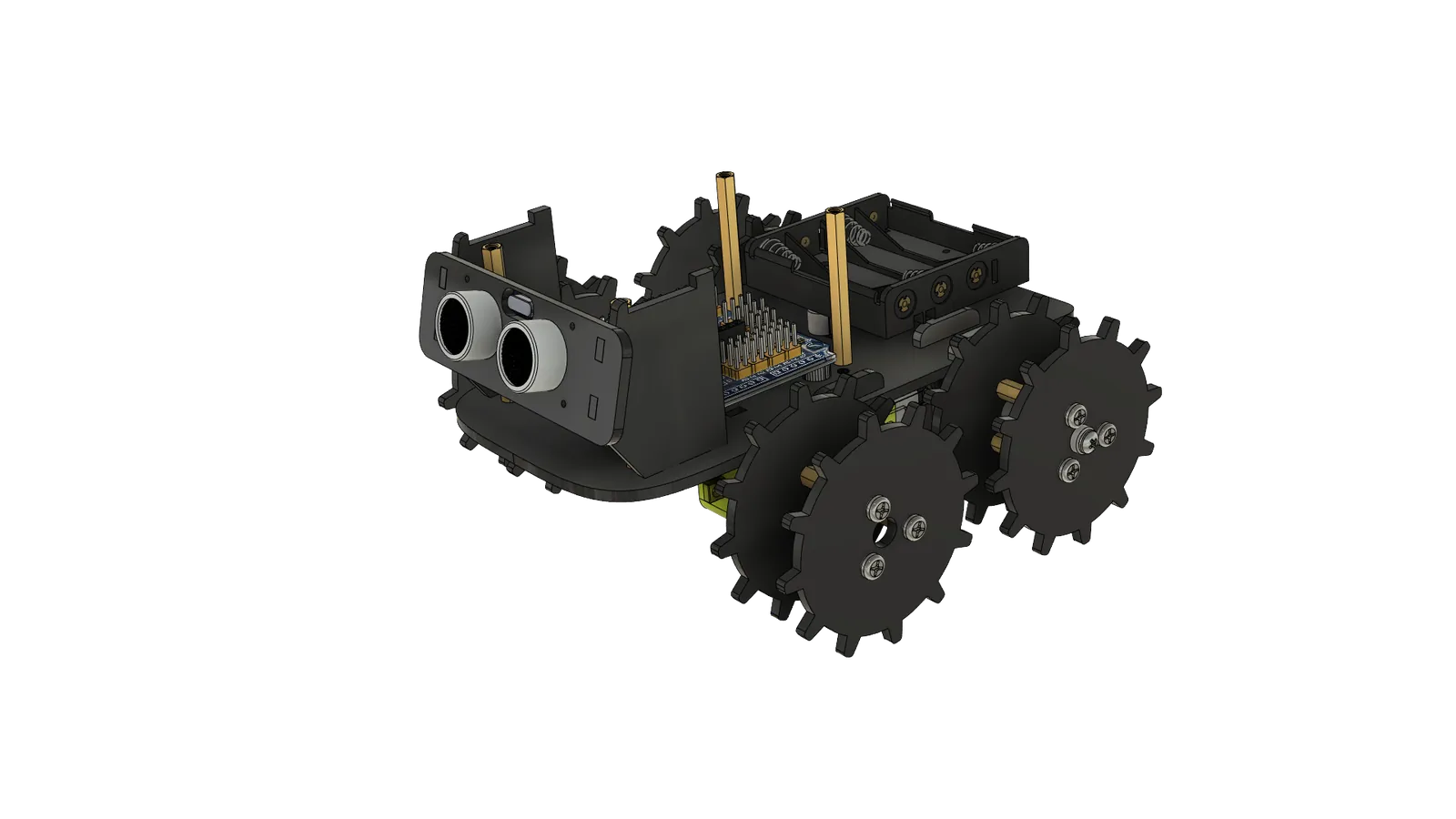
The project matured through successive fixes rather than a single version: v2, v3, v3.2, v3.3, v3.4, v3.5, v4, v4.1 and finally v4.2. These CAD iterations refined component layout, body proportions and the drivetrain.
The assembly guide is part of the design
The product's most concrete design-for-assembly (DFA) evidence is its step-by-step visual assembly guide. Each step clearly shows which standoff, at which length and in which hole, using labels like A1, A2, Y1-Y4.
REX was commercially launched by Robotistan as Peanut, with dedicated packaging and an 18-page assembly manual, and is available for purchase through the Robotistan website.
A product that didn't stay a render
Peanut was sold as a real product under the Robotistan brand, with its own box and assembly guide. This project is a concrete example of why design has to be considered together with production and the user experience, in this case, assembly.